


“At the still point of the turning world. Neither flesh nor fleshless;
Neither from nor towards; at the still point, there the dance is …”
T.S. Elliot
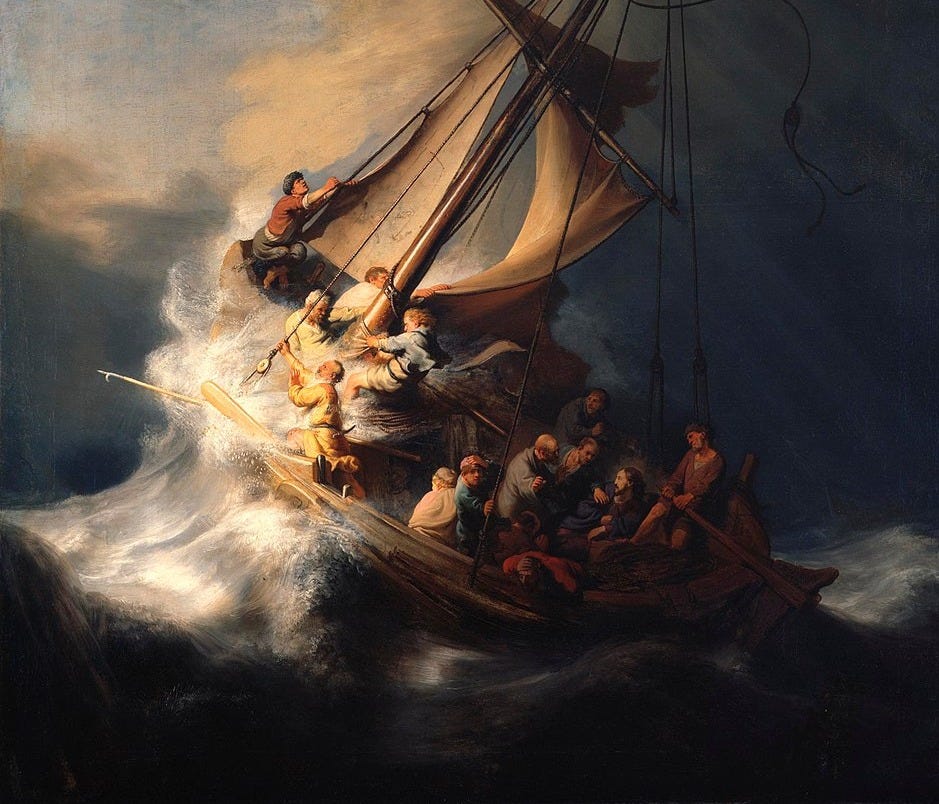
For some years, many voices have been sounding the alarm about the plight of young men. The data to support these concerns is plentiful, and paints a grim picture of young men dropping out of society in various forms; less likely to graduate university, less likely to marry, less likely to work, and retreating into potentially harmful corners of the online sphere.
Notably, the news for young females isn’t necessarily much better, but the specifics of the afflictions differ. For example, suicide plagues young males at three times the rate it does young females, however mental health as a whole is worse among young females.1 Young males are much more likely to be diagnosed with ADHD or a conduct disorder, however young females are much more likely to be diagnosed with anxiety or depression.2
This balance of evidence is important, lest anyone cast the situation as females succeeding at the expense of males, but the questions remain. There appears to be a deep disturbance, sufficiently fundamental that it can emerge in forms touching everything from mental health to politics, relationships to gender roles, and education through to economics. What is it, plaguing men and women, such that everything appears to be in flux?
“80% said they were unsure what exactly masculinity was. “It’s toxic, that’s all I ever hear,” said one participant.”
Perhaps this sense of flux is a symptom, perhaps a self-reinforcing contributor. Evidence from the UK, collected by psychologist Lee Chambers, identifies that young men are unclear what it means to be a man. Sampling of over 1,000 adolescents found them retreating from the uncertainty of this world, into the online, where the rules are clearer. More than half of respondents found the online world more rewarding than the physical world, and nearly 80% said they were unsure of what exactly masculinity was. “It’s toxic, that’s all I ever hear,” said one participant.3
A Culture of Disorientation
This sense of cultural fluidity in the modern West, generates a lack of cultural guidance, leading to a state where all are disoriented. Culture ought to offer people a map of how to act in and to navigate the world, but modern Western culture is profoundly efficient at doing precisely the opposite.
“Culture ought to offer people a map of how to act in and to navigate the world, but modern Western culture is profoundly efficient at doing precisely the opposite.”
We can see this evidenced in the proliferation of modern causes around which one can organise a tribe, a purpose, a politics. All of these in search of a North Star, whether it be environmentalism, various forms of social justice, economic success, or techno-transhumanism. Each pseudo-religion comes with its share of pundits, saints, stories, and morals. This is not to negate the underlying concerns of some of these causes, but rather to highlight that their real concerns offer a sense of mission centred grounding, amidst the storm of cultural confusion.
Some of this may reflect the rupturing of the grand narrative of Christendom. The splintering effect of an ever diverging Protestantism, the fall in status of the Catholic Church, the near self annihilation of World War I and II, and the oikophobia4 of the late 20th and early 21st centuries, all of which laid low the notion of a grand sweeping story which encompassed all of human history and beyond.
When State Becomes Church
Into this void steps Mother State; a new matriarch to shepherd where the Church has retreated. The morals and dogma are less explicit and perhaps follow as logical extension of a liberal democratic ethos.
A multiethnic state manifests in a commitment to inclusive multiculturalism. While nobly seeking to facilitate a successful multiethnic society, this also has the effect of repudiating behavioural norms.
A cultural liberalism and formal secularism drives religion into the private sphere. This limits the orienting effect of the erstwhile highest values of the people, inserting commitments to tolerance over truth and consensus over conscience.
The sacred is that which is of highest value. What we value we pay attention to. What we pay attention to, we gravitate toward and ultimately, become. To drive that which is sacred into the sphere of the private diminishes our power to attend to it, and thus diminishes it sacred status. To deprive the people of the sacred, is to deprive them of a rudder.
“To deprive the people of the sacred, is to deprive them of a rudder.”
When nothing is sacred, our attention is free to be directed by others. Ellsworth Toohey, a character in Ayn Rand’s Fountainhead, articulates the machiavellian nature of this.
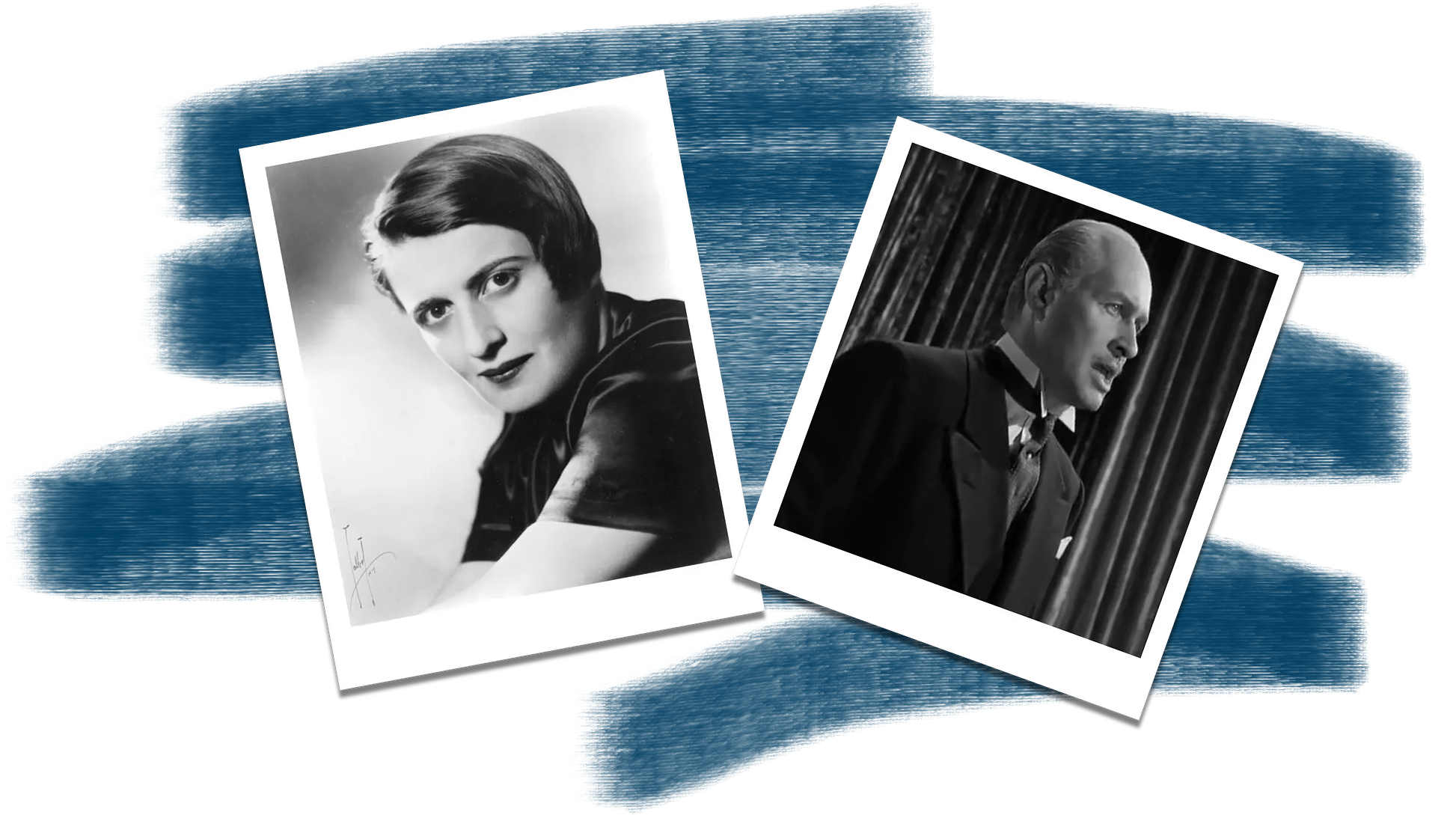
“Don’t set out to raze all shrines – you’ll frighten men”, says Toohey. “Enshrine mediocrity - and the shrines are razed”.
Toohey continues, “Then there’s another way. Kill by laughter. Laughter is an instrument of human joy. Learn to use it as a weapon of destruction. Turn it into a sneer. It’s simple. Tell them to laugh at everything. Tell them that a sense of humour is an unlimited virtue. Don’t let anything remain sacred in a man’s soul – and his soul won’t be sacred to him.”5
A culture that punishes discernment, even of basic categories like male and female; a culture that removes behavioural norms; a culture that says highest values must be kept private - such a culture risks creating unthinking, unmoving, apathetic individuals, unsure where to direct their energies and attentions until it is advertised to them.
Christ in the Chaos
Into this milieu, many younger adults are finding the Church to be a rock.
In Britain for example, Catholics are growing at a rate such that among Gen Z Catholics now outnumber Anglicans, and are on course to overtake Anglicans in absolute numbers for the first time since 1527.6 Pentecostalism in Britain has seen a similar surge, with numbers up since 2018, after decades of decline. France has seen exponential increases in adult baptisms year-on-year, with many coming from Islamic backgrounds or no religious background at all. This trend is also evidenced by high profile conversions such as Shia LeBeouf, Ayaan Hirsi Ali and Russell Brand.7
Elliot’s poem partially quoted at the open of this essay, continues, “Except for the point, the still point, There would be no dance, and there is only the dance.” Widely regarded as speaking of Christ, Elliot affords us the view that Christ is the ‘still point’ of which we may lay hold in this whirlwind of chaos.
Perhaps each age is set to forever rediscover, that without the Still Point the dance falters, the dancers stumble, and the musics strains. Young adults we can hope, may be finding their rhythm once more.
OECD (2025), Gender Equality in a Changing World: Taking Stock and Moving Forward, Gender Equality at Work, OECD Publishing, Paris, https://doi.org/10.1787/e808086f-en.
Kieling, Christian et al. “Worldwide Prevalence and Disability From Mental Disorders Across Childhood and Adolescence: Evidence From the Global Burden of Disease Study.” JAMA psychiatry vol. 81,4 (2024): 347-356. doi:10.1001/jamapsychiatry.2023.5051
Pearson, Helen. "Are boys really in crisis? What the science says in the age of the manosphere." Nature 652.8108 (2026): 22-25.
Beckeld, Benedict. “'Oikophobia': Our Western Self-Hatred.” Quillette, 7 Oct. 2019, quillette.com/2019/10/07/oikophobia-our-western-self-hatred/.
Rand, Ayn. The Fountainhead. 1943.
https://thecatholicherald.com/article/catholics-set-to-exceed-anglicans-among-churchgoers-for-first-time-since-reformation
https://thecatholicherald.com/article/why-are-gen-z-returning-to-the-church